Non-Destructive Concrete Rebar Scanning in Johannesburg: Why Structural Auditing Matters

Drilling, coring, or cutting into concrete structures without knowing what lies inside is extremely high-risk. Accidental damage to reinforcing steel, post-tension cables, or electrical conduits can compromise structural integrity. Concrete rebar scanning in Johannesburg provides non-destructive structural imaging to ensure safe operations.
The Dangers of Core Drilling blindly
When executing renovations or pipe installations on multi-story commercial properties in Johannesburg, core drilling is common. However, striking structural elements has serious consequences:
- Severing Post-Tension Cables: Post-tension cables are under immense force. Severing one causes catastrophic snapping that can collapse concrete slabs and injure site workers.
- Cutting Rebar: Reducing the steel reinforcement ratio weakens structural load capacities, leading to structural failures and building code violations.
- Striking Electrical Conduits: Cutting live electrical feeds causes high-risk arc flash explosions, localized power outages, and electrocution hazards.
Concrete GPR Scanning: The Non-Destructive Solution
By utilizing high-frequency Ground Penetrating Radar (GPR) sensors (typically 1.6 GHz to 2.6 GHz), technicians can scan concrete slabs to depths of up to 500mm. GPR scans reveal reinforcing rebars, tensioning tendons, metallic/non-metallic conduits, and internal air voids. TerraX3D offers comprehensive rebar scanning services across Johannesburg, mapping targets directly on the concrete surface before any work begins.
Ready to map your site with millimeter accuracy?
Avoid costly strikes and coordinate clashes. Contact our professional geomatics engineering team to discuss your project requirements today.
Recommended Reading
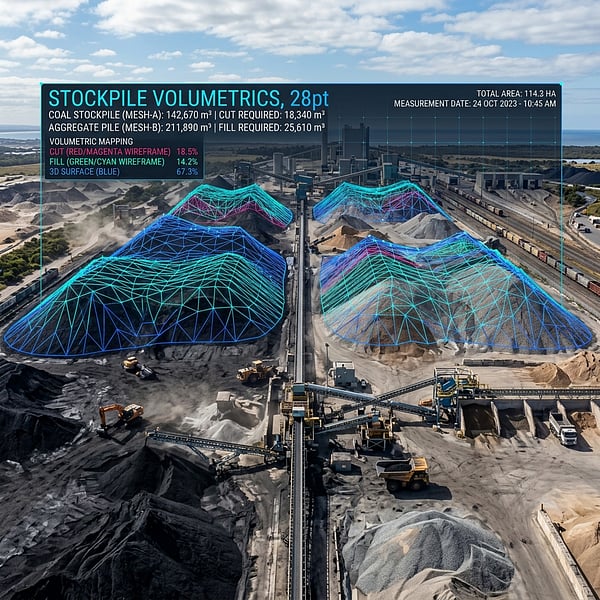
Drone Volumetric Stockpile Surveys: Precision Measurement & Cut/Fill Analytics in Mining
How UAV drone LiDAR and photogrammetry achieve sub-1% volumetric accuracy for mining stockpiles, cut/fill balancing, and bulk material audits in South Africa.
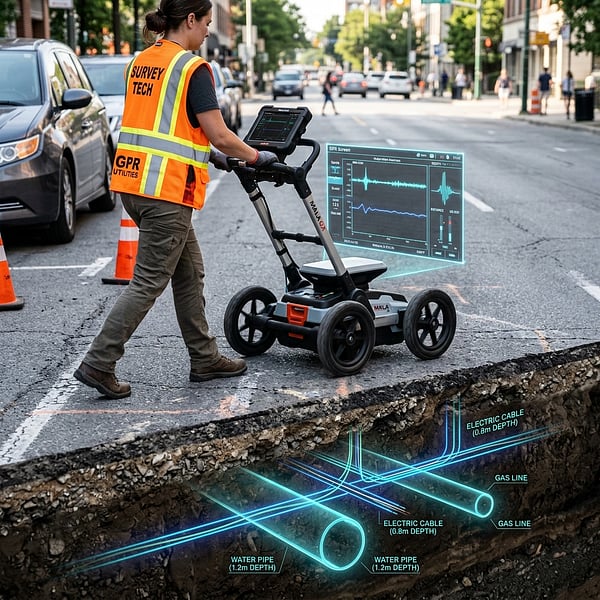
Ground Penetrating Radar (GPR) vs Electromagnetic Locators: Avoiding Subsurface Utility Strikes
Understand the distinct strengths of Ground Penetrating Radar (GPR) and Electromagnetic Locators (EML) for non-destructive subsurface utility engineering in South Africa.
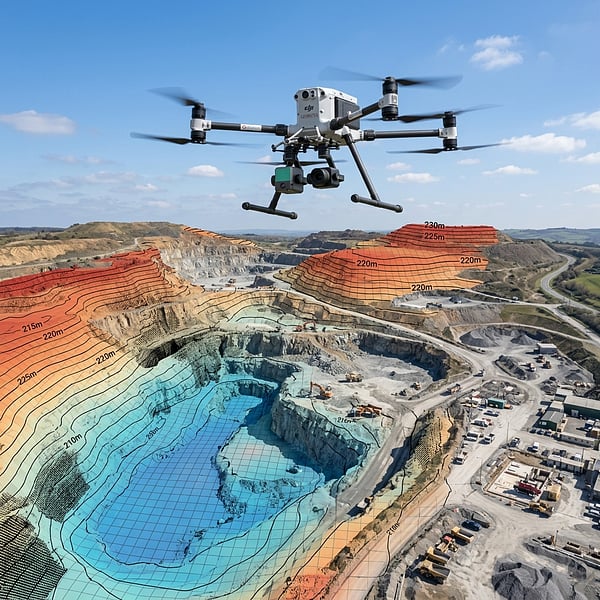
Aerial Photogrammetry vs LiDAR: Choosing the Right Geospatial Survey Method
Compare UAV photogrammetry and aerial LiDAR for topographic surveying, corridor inspection, and canopy penetration across South African terrain.